



A carpet may look clean across most of the room while dark gray or black lines gradually appear along the baseboards. These marks often develop in areas that receive very little foot traffic, making their appearance especially confusing.
One common cause is filtration soiling, a condition in which moving air deposits fine airborne particles into carpet fibers. As air passes through small gaps near walls, beneath doors, or around flooring joints, the carpet can act like a filter, trapping microscopic dust and pollutants.
Unlike ordinary surface dirt, filtration soil can become deeply embedded and difficult to remove with regular vacuuming.
For Davie homeowners, understanding why these lines appear is the first step toward choosing an effective cleaning method. It also helps explain why dark carpet edges can return when the underlying airflow conditions remain unchanged.

Filtration soiling often develops gradually, sometimes over months or years.
The Carpet and Rug Institute recognizes filtration soiling as a distinct carpet condition involving fine airborne particles.
These particles can include fine dust, soot, outdoor pollutants, and other microscopic contaminants circulating through indoor air.
The pattern can be particularly noticeable on light-colored carpets, where even a relatively narrow strip of contamination contrasts with the surrounding material.
Filtration soiling may appear in several locations:
A black line along a wall does not automatically mean the carpet has been neglected.
In some cases, the location of the discoloration provides a more useful clue than the amount of visible dirt elsewhere in the room.
The unusual feature of filtration soiling is that the dirt is not necessarily tracked onto the carpet by shoes.
Pressure differences created by ventilation systems, temperature changes, or outdoor conditions can draw air through small building gaps, even when the surrounding carpet is not exposed to heavy foot traffic.
A useful example is a carpeted bedroom where a dark line develops beneath the door.
The center of the room may receive regular cleaning and remain relatively bright. However, the narrow area beneath the closed door can gradually collect airborne contamination.
In Davie, the long South Florida cooling season keeps central air systems running for much of the year. In some of the area's single-story ranch homes, filtration lines may be most noticeable where carpet meets exterior walls, especially when fine dust from sandy yards or nearby equestrian activity circulates indoors.
However, air conditioning itself does not automatically cause black carpet edges. The issue depends on airflow pathways, airborne particles, and the carpet's construction.
This distinction matters because cleaning the carpet may remove accumulated soil without correcting the conditions that allowed it to develop.
Not every dark carpet edge is caused by filtration soiling.
Different conditions can produce similar-looking marks, but they do not respond equally to cleaning.
| Carpet Condition | What May Be Happening |
|---|---|
| Filtration soiling | Airborne particles accumulate along airflow pathways |
| Ordinary dirt buildup | Dust and debris collect along edges that receive less vacuuming |
| Carpet discoloration | Dyes or fibers have changed because of chemicals, light, or other damage |
| Physical wear | Repeated friction has altered the carpet's texture and appearance |
For example, a dark strip beside a frequently used doorway could contain ordinary tracked-in soil rather than filtration contamination.
Likewise, a discolored area near a wall may be related to an old spill, an unsuitable cleaning product, or a permanent change in the carpet fibers.
The difference becomes important when deciding how to treat the affected area.
Deep carpet cleaning may improve embedded soil, but it cannot reverse permanent dye loss or restore physically damaged fibers.
Before applying cleaning products, homeowners should consider whether the discoloration follows an airflow-related pattern or resembles ordinary localized staining.
When the cause is unclear, professional assessment can help establish realistic cleaning expectations.
Homeowners searching for how to clean carpet edges often begin by vacuuming the dark lines repeatedly.
Routine vacuuming is useful, but filtration soiling presents a particular challenge.
The particles involved can be exceptionally fine. Over time, they may penetrate deeply into the carpet pile and become difficult to extract using ordinary household equipment.
A standard vacuum head may also fail to reach narrow areas directly beside baseboards.
Using a suitable crevice attachment can help remove accessible dust and loose debris, but repeated passes may not eliminate established filtration lines.
Regular maintenance can help limit additional buildup.
Excessive friction can damage fibers, while unsuitable cleaning products may cause discoloration or leave residue.
Homeowners should also be cautious around carpet edges where tack strips or sharp fasteners may be present.
When black lines persist despite routine maintenance, the problem may require a more specialized approach than ordinary vacuuming.
Professional carpet cleaning can sometimes significantly improve the appearance of filtration soiling, but complete removal is not guaranteed.
The result depends on several factors, including the carpet material, type of contamination, age of the buildup, and previous cleaning attempts.
According to the Carpet and Rug Institute, removing accumulated filtration soil can require specialized treatment, and certain contaminants may remain even after professional cleaning.
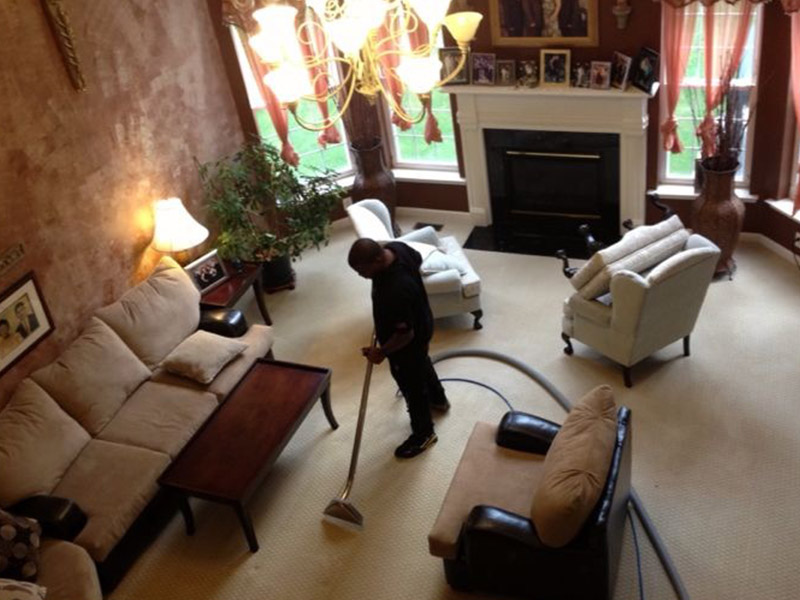
Feet Up Carpet Cleaning provides professional carpet cleaning in Davie using methods chosen for the carpet's condition and cleaning needs.
Our primary method is hot water extraction, which helps loosen and remove embedded soil. Lower-moisture cleaning options are also available when appropriate for the carpet.
However, filtration soiling is not always removed by a standard deep cleaning process alone.
A heavily darkened carpet edge may require targeted attention, suitable cleaning chemistry, and careful evaluation of the fibers.
Before treatment, it is important to determine whether the visible lines consist primarily of removable contamination or whether permanent discoloration has also occurred.
If airflow continues to carry fine particles through the same gaps, dark lines may gradually return after cleaning.
Addressing recurring filtration soiling may therefore involve both carpet maintenance and investigating possible airflow pathways.
For Davie homeowners, the objective should be realistic improvement while protecting the surrounding carpet from unnecessary treatment.
A common cause is filtration soiling. Air moving through small openings can leave microscopic dust and other particles trapped in the carpet fibers, gradually creating dark lines. Ordinary dirt and permanent discoloration can also produce similar marks.
Sometimes significant improvement is possible, but complete removal cannot be guaranteed. Results depend on the carpet fibers, contamination type, age of the buildup, and cleaning method.
Use a suitable vacuum attachment to remove loose debris, following the carpet manufacturer's instructions. Avoid aggressive brushing, excessive moisture, and unapproved cleaning products. Persistent dark lines may need professional evaluation.
They can. If the airflow pathways and sources of airborne particles remain unchanged, filtration soil may accumulate again over time.
Black lines along carpet edges are not always the result of inadequate cleaning.
In many cases, filtration soiling develops because moving air carries fine particles into narrow sections of carpet, where they gradually accumulate.
Routine vacuuming can help control accessible debris, but deeply embedded contamination may require professional attention.
For Davie homeowners, recognizing the difference between filtration soil, ordinary dirt, and permanent carpet discoloration can prevent unnecessary cleaning attempts.
The goal is not simply to make the dark lines disappear temporarily. It is to understand why they developed, select an appropriate treatment, and reduce the conditions that may cause them to return.
If dark lines remain along your carpet edges despite regular vacuuming, Feet Up Carpet Cleaning of Davie can assess the affected areas and recommend an appropriate cleaning approach.
Call 954-302-7046 to discuss your carpet cleaning needs and request a free estimate.